
Basement Waterproofing
Masters at utilising untapped space beneath your homes
ARTI Waterproofing delivers complete below-ground protection for both new builds and refurbishments.
We design and install systems that keep basements permanently dry and fully compliant with BS 8102:2022.
Our experts work with all three protection types — Type A, B and C — ensuring every project has the right combination for lasting performance.
Type A Waterproofing
Type A waterproofing can be applied either internally or externally depending on project requirements and site conditions. Both systems form a continuous barrier that prevents groundwater penetration, ensuring a dry, durable, and habitable structure
Type A - Internal Waterproofing
Applied to the inside face of the structure, internal Type A waterproofing (also called negative-side waterproofing) is used where external access isn’t possible.
The system creates a continuous barrier that resists water pressure and stops moisture entering the space.
At ARTI, we use high-performance cementitious coatings and liquid-applied membranes designed to bond directly to concrete or masonry surfaces.
These systems are ideal for basement refurbishments and conversions, providing a clean, durable, and long-term dry finish — fully compliant with BS 8102:2022 standards.


Type A - External Waterproofing
External Type A waterproofing (or positive-side waterproofing) is applied to the outside face of the structure, preventing water from ever reaching the concrete. This approach offers the highest level of protection and is preferred for new builds and projects where external access is available.
Our systems include liquid-applied membranes, sheet membranes, and flexible cementitious coatings that form a seamless barrier against groundwater.
These are expertly detailed around joints, penetrations, and interfaces to ensure complete watertight integrity — delivering long-term performance and compliance with BS 8102:2022.

Type B Waterproofing
Type B waterproofing, also known as structurally integral protection, relies on the concrete structure itself to prevent water ingress. This is mainly achieved through several key elements working together such as concrete additives, joint sealing systems and waterbars
Type B - Concrete Additives
At the core of any Type B waterproofing system is the use of watertight concrete enhanced with integral additives. These specialist admixtures are blended directly into the mix during batching, reducing permeability and sealing capillaries within the concrete.
The result is a structure that resists water penetration from within—without relying on external coatings or membranes. When designed and placed correctly, waterproof concrete provides long-term protection against groundwater pressure while maintaining the strength, durability, and finish of a standard structural pour.


Type B - Joint Sealing System & Waterbars
Installed along construction joints before pouring, injection hoses provide a route for resin injection should water ingress occur. This allows the joint to be re-sealed internally, avoiding excavation or disruption. Injection hoses are a maintainable solution often used in high-risk or critical areas requiring long-term reliability.
Waterbars are embedded within joints to form a physical barrier that stops water passing through. Made from PVC, rubber, or hydrophilic materials, they seal under pressure and keep the structure watertight by preventing water migration between pours.
Hybrid products, such as the Newton Resin Injection Hose Waterbar, merge both technologies. They provide the physical protection of a waterbar and the flexibility of a re-injectable hose, offering long-term security and adaptability for high-specification basements and retaining walls.

Type C Waterproofing
Type C waterproofing, also known as cavity drain protection, manages water that penetrates the structure by directing it into a controlled drainage system. This system includes cavity membranes, perimeter channels, and pumps, keeping the internal environment completely dry and protected.
Type C - Cavity Drain Systems
Type C waterproofing, otherwise known as a cavity drain system, is designed to manage groundwater, not resist it. This system creates a maintainable barrier between the structure and the internal environment, ensuring that any water entering the structure is safely collected and redirected away.
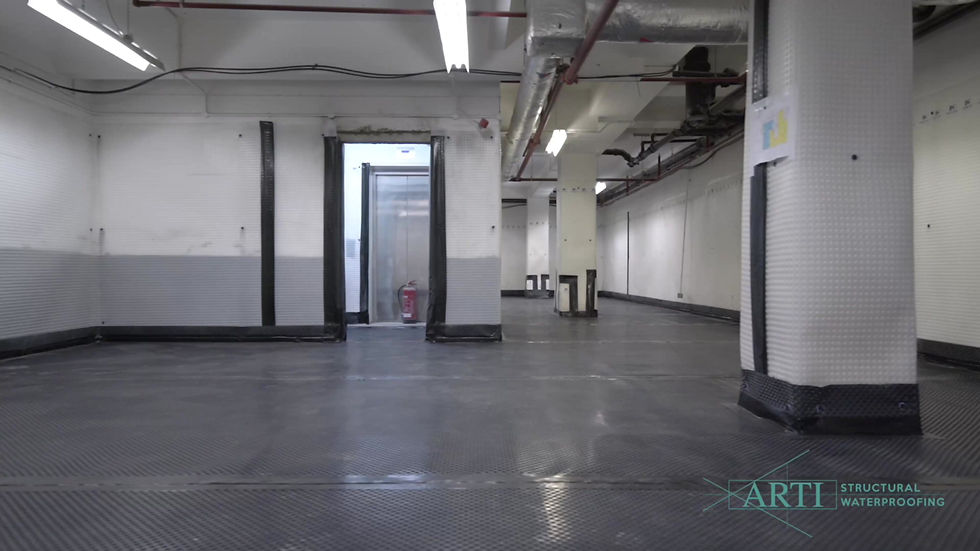
A durable, high-density polyethylene membrane—recognisable by its dimpled, studded surface—is applied to the walls and floors of the basement. The dimples form a continuous air gap that allows water to flow freely behind the membrane without pressure building up against the structure.
Water collected within this void is directed toward a series of perimeter drainage channels, which run discreetly around the base of the walls. These channels lead the water to a sump chamber, where an automatic pump system discharges it safely outside the property or into a suitable drainage point.
The Type C system is considered a maintainable form of waterproofing, meaning it can be serviced throughout the life of the building. Access ports allow the drainage channels and pump chambers to be inspected and cleaned, ensuring ongoing performance and compliance with BS 8102:2022 standards.
